
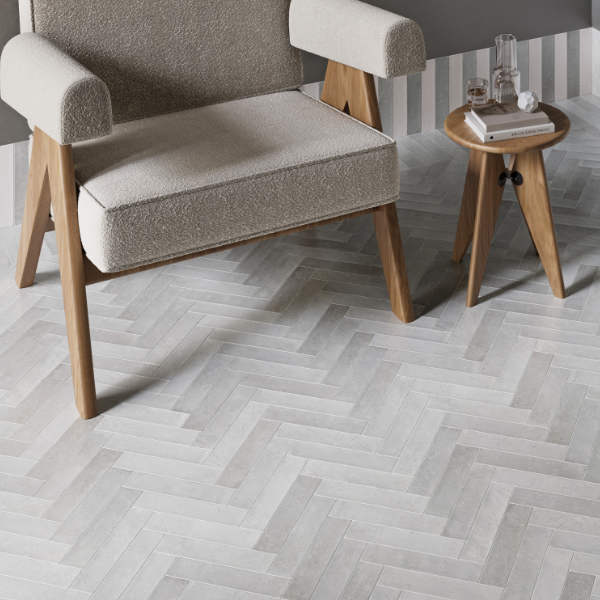
Pattern and Purpose
Herringbone floor tiles are one of those choices that always look intentional. The interlocking zigzag pattern gives a floor far more visual depth and movement than a standard straight lay, and it works across a huge range of styles, from traditional Victorian-era hallways to stripped-back contemporary kitchens. If you want a floor that makes a proper impression without being over the top, herringbone floor tiles are hard to beat.
The pattern looks effortless when it’s done well, but there’s more planning involved than most people expect. Working out where to start, how to handle the edges, and what size tile works in the space all needs a bit of thought. Tiles that are even slightly the wrong size can make the pattern feel cramped or off-balance, and a herringbone laid without precision can look untidy in a way that a straight lay would hide. If you’re unsure, speak to a tiler with experience in patterned layouts before you buy.
If you’re still weighing it up, finding out why herringbone floor tiles work in everyday homes might help you decide.
Built-In Character
If you want something with texture and character, the Bedrock Argento Herringbone Limestone is a really strong option. It has a distressed, aged-stone surface that gives it warmth and a handmade quality. The cool Argento tones work particularly well in neutral or monochrome interiors, and because it’s porcelain, it has all the durability you’d expect without the maintenance demands of real limestone.
Don’t Forget The Grout
There’s a common assumption that herringbone floor tiles are harder to clean because of the angled edges. In practice, the grout lines run in the same direction as any other tile. You just have more of them in diagonal form. A slightly smaller grout joint actually helps draw the eye to the pattern rather than the joints, so choose your grout colour carefully. Lighter grout emphasises the pattern, while a tone-on-tone match gives a more subtle, blended effect.
Make A Statement
For something that makes more of a statement, the Gallery Marble Effect Porcelain Tile in a herringbone layout is striking. The dark veined marble effect brings a lot of drama to a floor, and it is the kind of tile that works well in an entrance hall where you want people to notice the floor as soon as they walk in. Because it’s a porcelain tile rather than real marble, it’s also far more practical for busy areas.
A Pattern For Every Room
Herringbone floor tiles are particularly effective in hallways because the diagonal lines draw the eye along the length of the space, making it feel longer. They also work well in bathrooms and wet rooms, where you might be using smaller format tiles and want the pattern to do some of the visual heavy lifting. In kitchens, a herringbone floor can add structure to an open-plan space, helping to define zones without the need for physical dividers.
Quiet Impact
For a more relaxed, contemporary take on the look, the Essence Herringbone Porcelain Tile delivers a clean, understated effect. The cool silver tone works really well in modern kitchens or bathrooms, and the porcelain construction means it’s suitable for underfloor heating. This is something a lot of customers ask about. It’s also a good choice if you want herringbone but don’t want the floor to dominate the whole room.
Bestsellers
-
 Gallery – Dark Emperador Zebra Marble Effect Porcelain Tile
£62.33/m² – £76.37/m²
-
 Bedrock Argento – Distressed Herringbone Limestone
£154.79/m²
-
 Essence – Silver Herringbone Porcelain Tile
£56.90/m²
Herringbone Floor Tiles at Mayfield Porcelain
Our showroom in Mayfield, East Sussex is the best place to start if you’re considering herringbone floor tiles. We can lay tiles out for you to show how the pattern actually looks at scale, which is really useful because photos don’t always give an accurate sense of how a pattern reads once it covers a whole floor. Seeing a few tiles arranged in situ under real light makes a huge difference.
We stock a range of herringbone floor tiles across a variety of styles, finishes, and price points, so whatever you’re looking for, there’s a good chance we can help. Our team is happy to advise on sizes, grout colours, and compatible adhesives. Call us on 01435 512301, fill out our contact form, or pop into the showroom any day from Monday to Friday, 8.30am to 5pm, or Saturday morning until 12.30pm.
Frequently Asked Questions
What size tiles work best for a herringbone pattern?
Smaller rectangular tiles, like 7.5x30cm or 10x20cm, are the classic choice for herringbone. However, longer plank-style tiles can also be used for a more contemporary feel. The size you choose should relate to the size of your room; very large tiles in a small room can make the pattern feel cluttered.
Is herringbone harder to lay than straight tiles?
Yes, it typically takes more time and skill than a straight lay because every tile needs to be cut at a 45-degree angle at the edges. We’d always recommend using an experienced tiler for herringbone patterns. The extra time involved means labour costs may be slightly higher, but the result is worth it.
Can herringbone floor tiles be used with underfloor heating?
Most porcelain herringbone tiles are compatible with underfloor heating, but always check the specific product specification. Porcelain conducts heat well, which makes it a good pairing with UFH systems. Make sure your adhesive is also rated for use with underfloor heating.
Do herringbone tiles work in small rooms?
They can work very well in small rooms, particularly in hallways and bathrooms. The diagonal lines can actually make a narrow space feel wider. Stick to smaller format tiles and a tonal grout to keep the pattern from overpowering the room.
Can I come into the showroom to see herringbone tiles in person?
Absolutely, and we’d encourage it. Our showroom in Mayfield, East Sussex is open Monday to Friday 8.30am to 5pm and Saturday 8.30am to 12.30pm. Give us a call on 01435 512 301 or drop us a line at sa***@ma***************.uk and we’ll be happy to help.
