
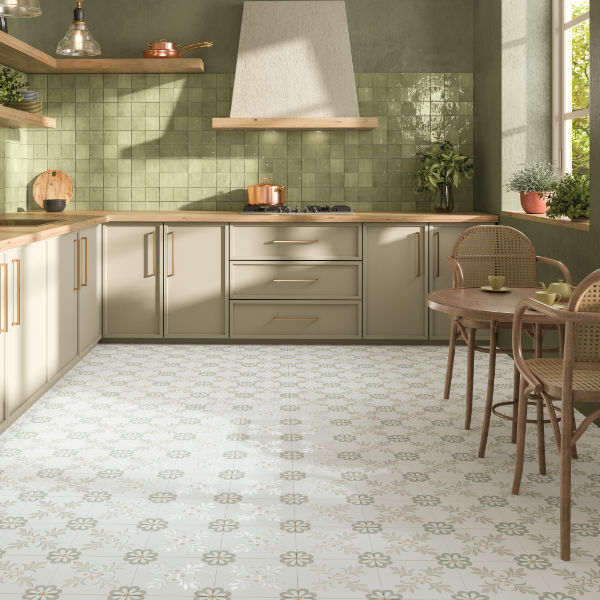
Why Porcelain Floor Tiles Are Worth The Investment
Porcelain floor tiles are dense, hard-wearing tiles fired at high temperatures, so they stand up to daily life in busy homes without losing their finish. Mayfield Porcelain are a family-run tile retailer based in East Sussex, supplying homeowners and tradespeople across the country with a range of porcelain tiles for floors, walls and outdoor areas. The aim is simple. We help you choose the right tile for your room, your floor, and the way you actually live, then back it up with proper advice on installation, grout, and aftercare so the finish lasts.
Porcelain has a few clear advantages over ceramic and natural stone. The fired body is harder, less porous, and far more resistant to staining and moisture, which makes it well-suited to kitchens, hallways, bathrooms, and open-plan spaces where a single floor needs to take spills, paws, prams, and wet boots without wearing. It also takes underfloor heating well, the dense body conducts heat efficiently and warms through evenly. Wood-effect, stone-effect, marble-effect, and patterned finishes mean you can choose almost any look without giving up the practicality.
Choosing A Tile That Suits The Room
Most floors fail – not because the tile is wrong, but because the tile was chosen for the way the room looked in a photograph rather than the way it is lived in. A pale, lightly veined limestone-effect finish that looks beautiful in a picture will read very differently against muddy footprints in a hallway. Think first about the room, who walks through it, what gets dropped on the floor, and whether the area is bright or shaded. From there, you can narrow the colour, the finish, and the format with confidence.
For a softly aged, characterful floor in kitchens, living rooms, and hallways, the Amalfi Tile is a useful reference. Its warm, sun-washed tone and gently tumbled edges echo traditional limestone flagstones, but the porcelain body delivers consistency from box to box and low maintenance long term. It works well in cottages, period properties, and modern barn conversions, and it pairs comfortably with oak joinery, warm metals, and softly painted walls. Available in an opus pattern across four sizes, it gives an installer scope to set out a relaxed, traditional floor without sacrificing precision at the joints.
Looking After Porcelain Floor Tiles
Porcelain is one of the lowest-maintenance floor surfaces you can choose. Sweep or vacuum regularly to lift grit, then wash with warm water and a pH-neutral floor cleaner when the surface needs it. Avoid harsh chemical cleaners and steam mops on textured finishes; both can dull the surface or push residue into the texture over time. After installation, ask your tiler for a final clean to lift any grout haze before sealing the joints, then leave the floor alone for the curing period the adhesive and grout manufacturer recommends. From that point on, a weekly mop and a seasonal deeper clean are generally all the floor needs.
Additionally, you should consider the price point. Porcelain tends to be the more expensive option, but other options typically need more maintenance, and some need replacing every 10 years. Weigh up the pros and cons, and come to a decision about the cost. We have a blog about what makes porcelain floor tiles more expensive, which is definitely worth reading if you’re not sure.
Patterned Tiles & Decorative Finishes
Patterned tiles bring personality to a room that a plain floor cannot, and they read very differently depending on the format, the grout shade, and where they sit in the layout. For a feature zone like a hallway, an entrance hall, a downstairs WC, or a garden room, patterned porcelain can carry the entire scheme and let the rest of the room sit quieter. For larger areas, mixing patterned tiles with a complementary plain in the same range often works better than a wall-to-wall pattern, and it gives you somewhere to land furniture without competing with the floor.
A good illustration of where pattern earns its place is the Artisan Atrium Tile, part of an Italian collection that captures the worn, encaustic character of Mediterranean courtyards in blue and white. It suits patios, terraces, and indoor-outdoor zones that need to flow together without losing grip when wet. The decorative face brings the personality, while frost, stain, and fade resistance from the porcelain body keeps it looking right season after season.
Format, Layout, & Grout Choices
Format and layout influence the finished floor as much as the tile itself. Larger formats reduce the number of joints across a wide kitchen or open-plan area, which makes the room feel calmer, and the floor look more generous. Smaller formats and planks look great in hallways, utility rooms, and pattern-led schemes where the joints are part of the design. Grout shade is the other decision. A near-match grout looks continuous and modern, framing the room rather than the tile, while a contrasting grout emphasises every joint and reads more traditional. As a working rule, ask for a sample of the tile against the grout shade you are considering before you commit, ideally in the actual light of the room.
Wood Effect Porcelain Floor Tiles
Wood-effect porcelain has become one of the most popular indoor floor styles because it delivers the look of timber with none of the maintenance worries. It will not warp in a wet room, it will not gap with seasonal humidity, and it takes heavy traffic, pets, and underfloor heating in its stride. The better wood-effect tiles use surface texture, varied face designs, and consider colour blending so the finished floor reads like a real wood floor rather than a photographic repeat.
The Alpine Tile is a clear example. The plank format mimics sawn timber, and the anti-slip rating makes it a sensible choice for kitchens, hallways, bathrooms, wet rooms, and outdoor extensions. The brown colours sit well next to oak, walnut, and bronze tones, and because it is porcelain, it carries the same look across an open-plan ground floor without the cost or care that a real timber floor would demand.
Porcelain Floor Tiles For Every Room
When people ask which porcelain floor tiles work in which room, the honest answer is that almost any porcelain floor will work anywhere indoors; what changes is the finish you choose. For wet rooms, bathrooms, and entrances, look for an R10 or R11 anti-slip rating. For kitchens and family living areas, prioritise stain resistance and a finish that hides everyday marks between cleans. For utility rooms, hallways, and downstairs WCs, a hard-wearing matt finish with a slightly textured face will outlast a polished tile by years. Across all of these rooms, porcelain floor tiles give you the look you want and a floor that earns its keep.
If you would like to see how a tile reads in real light, our Mayfield showroom holds full-size samples and complete ranges side by side, with tile, grout, and trim shown together. We will walk through the rooms you are tiling, the subfloor, and the way the space gets used, then point you at the porcelain floor tiles that fit. For local customers, that is a quick visit. For customers further afield, we send samples and quote by phone.
Bestsellers
-
 Artisan Atrium – Patterned Antislip Outdoor Porcelain Tile
£55.00/m²
-
 Amalfi – Desert Porcelain Flagstone Tile
£42.83/m² – £63.13/m²
-
 Alpine – Brown Antislip Finish Porcelain Tile
£57.15/m²
Are porcelain kitchen floor tiles suitable for underfloor heating?
Yes. Porcelain is dense and conducts heat well, which makes it one of the best floor surfaces for use with underfloor heating. Follow the heating manufacturer’s commissioning schedule and let any new adhesive and grout fully cure before turning the system on.
Do porcelain floor tiles need sealing?
The tile body itself does not need sealing. Grout joints are the part of the floor that picks up dirt over time, and a grout sealer applied once the joints have cured will keep them easier to clean. Textured and tumbled surfaces can also benefit from a treatment that helps repel grease and grime in busy rooms.
How thick are porcelain floor tiles?
Indoor porcelain floor tiles are typically 9mm to 11mm thick. Outdoor and indoor-outdoor tiles are often 20mm, so they can be laid on a pedestal system or bedded on a patio base. We will confirm thickness when we put a quote together, so your tiler can plan thresholds and door clearances.
Are porcelain floor tiles slippery when wet?
A polished porcelain will be slippery when wet, just like any polished surface. For wet areas, choose a textured or anti-slip finish with an R10 or R11 rating. Many ranges offer the same tile in both a smooth and an anti-slip version so you can match indoor and outdoor.
How long do porcelain floor tiles last?
Well-laid porcelain floor tiles last for decades. The tile body itself does not wear out in domestic use. The two things that age a floor are grout discolouration and damage from impact, both of which can be put right by a tiler without replacing the whole floor.
Get In Touch
If you are weighing up porcelain floor tiles for a project, we would love to have a five-minute conversation about the room and talk you through the pros and cons honestly. Pop into our showroom in Mayfield, East Sussex, or call us on 01435 512 301 and we will help you choose a floor that works for the way you live.
