
A Floor That Works Over Time
Porcelain floor tiles last much longer than other floor tiles. That is the simple version of the answer, and it is the reason they cost more than ceramic, laminate, or luxury vinyl. The tile body is fired denser and harder, which means the floor stays looking the same year after year, takes daily life in its stride, and rarely needs replacing. Mayfield Porcelain are a family-run tile retailer in East Sussex, and we have spent years helping homeowners choose floors that last. Here’s why porcelain costs more, what the extra spend actually buys you, and why most people who pick it would do it again. For most rooms, paying more at the start works out as the cheaper choice over the life of the floor.
What You Get For The Money
Porcelain buys you body density, consistency, and a finish that does not wear off. The clay is fired at higher temperatures than ceramic, which produces a tile that absorbs almost no moisture, resists staining from oil, wine, and grease, and shrugs off impact from dropped pans. Because porcelain is manufactured to tighter tolerances, the tile that comes out of box twelve looks the same as the one from box one, which matters on large open-plan floors and when you need to match a replacement years later.
The finish is another crucial thing. Many vinyl planks have a printed pattern under a protective film, and the film scratches in high-traffic areas long before the rest of the floor looks tired. Porcelain colour and texture run through the body of the tile, so footfall, pets, and chair scrapes do not strip the look away. The Amalfi Tile is a useful illustration. The warm, sun-washed tone and gently tumbled edges are part of the tile itself, not a printed layer, and the floor reads the same in five years as it does in twenty.
Cheaper Floors End Up Being The Expensive Choice
The headline price of a vinyl plank or a budget ceramic looks attractive next to porcelain, but the comparison rarely lands where homeowners expect. Vinyl lifts and curls around dishwashers and underfloor heating, laminate swells the first time someone leaves a wet towel on it, and budget ceramic chips when a saucepan drops. A floor that needs lifting and replacing after five or six years is more expensive than a floor that costs more at the start and never moves. Add in the cost of clearing the room, refitting kitchens around new thresholds, and the time the house is unusable, and the maths usually tips toward porcelain before the second replacement.
Timeless Design
A floor is the longest-lasting decorative decision in any room. Kitchens get refitted, sofas get changed, walls get repainted, but the floor usually stays for the next renovation. That means the surface you choose now needs to suit the rooms you have not designed yet. Porcelain wins on this point because the better ranges draw from natural references like limestone, sawn timber, terrazzo, and traditional encaustic patterns, all of which read well across generations of interior taste.
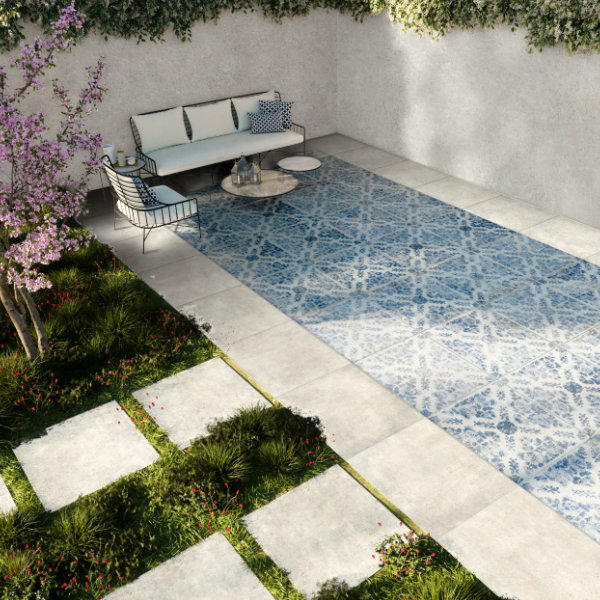
A patterned tile like the Artisan Atrium Tile, which takes its cues from worn Mediterranean courtyards in blue and white, highlights this well. Twenty years ago, it was fashionable, and today it remains the same. That is the test of a well-chosen floor.
The Cost In The Long-Run
Spread over its useful life, a porcelain floor is one of the cheapest surfaces in the house. A vinyl plank floor in a busy kitchen often looks tired in six years and needs replacing in eight. A laminate floor rarely makes it past a decade in a family home. Properly laid porcelain comfortably runs to twenty-plus years with no change in appearance, and the grout can be refreshed without lifting the floor. Divide the spend by the years it lasts, and porcelain becomes the value option.
Wood Effect Porcelain Floor Tiles
The idea of ‘buy cheap, buy twice’ is particularly clear with wood-effect porcelain like the Alpine Tile. It delivers the look of sawn timber across a kitchen, hallway, or bathroom, but it does not warp around the dishwasher, does not gap with humidity, and does not need sanding or refinishing every few years, the way real wood would. Overall, the upfront cost is worth the practicality and longevity, much more than a cheaper option, which may need more money spent on it in order to maintain.
What Makes Porcelain Floor Tiles Worth The Extra Cost?
Porcelain floor tiles are worth the extra cost because the spend buys you a floor that does not fade, does not chip easily, does not stain, does not need replacing in eight years, and looks the same after twenty winters as it did the first one. Across a kitchen, a hallway, or a full ground floor, that adds up to fewer headaches, fewer refits, and a room you do not have to keep redecorating around. For most homeowners weighing porcelain against a cheaper alternative, the extra outlay is the cheaper choice over time.
If you would like to see the difference in person, our Mayfield showroom in East Sussex holds full ranges of porcelain tiles side by side. Call 01435 512 301 or pop in.
Bestsellers
-
 Artisan Atrium – Patterned Antislip Outdoor Porcelain Tile
£55.00/m²
-
 Amalfi – Desert Porcelain Flagstone Tile
£42.83/m² – £63.13/m²
-
 Alpine – Brown Antislip Finish Porcelain Tile
£57.15/m²
Are porcelain floor tiles more expensive than ceramic?
Per square metre, yes, porcelain is more expensive than budget ceramic. Across the life of the floor, it tends to work out cheaper because the tile lasts longer and stays looking the same.
Are porcelain floor tiles worth it for a small room?
Yes. In small rooms like utility spaces, downstairs WCs, and entrance halls, porcelain delivers years of trouble-free service for a modest total spend, often less than the cost of replacing a vinyl or laminate floor twice.
Do expensive porcelain floor tiles last longer than budget ones?
Not always. Lifetime mainly comes down to body density, installation, and the finish you choose for the room. A well-chosen mid-range porcelain laid properly will outlast a premium tile laid badly.
Will porcelain floor tiles add value to my home?
A well-laid porcelain floor reads as a quality finish to buyers, especially in kitchens and open-plan ground floors. It will not necessarily add a specific figure to the valuation, but it removes a renovation cost from the buyer’s mental list.
Is porcelain harder to install than other tiles?
Porcelain is denser and harder to cut than ceramic, so it needs a tiler experienced with the material and the right blades. Most professional tilers work with porcelain regularly, so this is rarely a real-world obstacle.
Get In Touch
If you are weighing porcelain floor tiles against cheaper alternatives for an upcoming project, a five-minute conversation will save you more than any blog post can. Call us on 01435 512 301 or visit the Mayfield showroom in East Sussex.
