
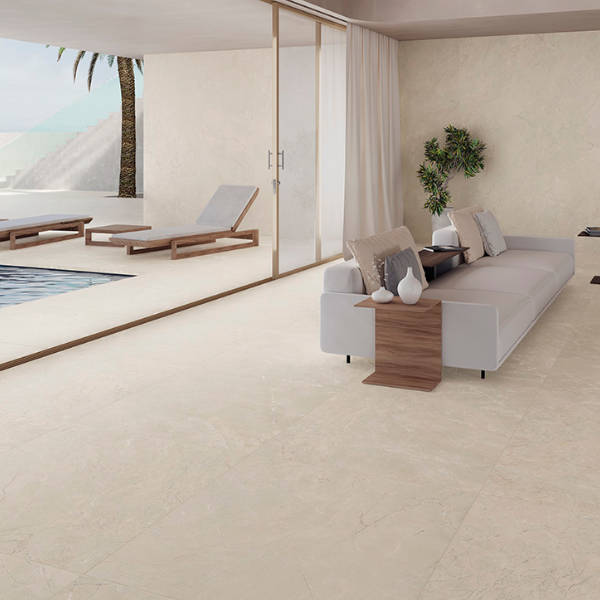
Consistently Timeless
There are tile colours that have their moment and then fade out. Cream is not one of them. The real reason cream porcelain floor tiles keep selling, year after year, isn’t just about them looking good right now. It’s something more practical than that. When people make a permanent flooring decision, they tend to choose what won’t date, what works with the most options, and what holds its value in the property. Cream ticks every one of those boxes and porcelain backs it up with performance that other materials struggle to match.
The Practical Choice
Plenty of people start their search with a clear idea of wanting something bold, a dramatic dark floor, a graphic tile, something with visual impact. And then they sit with it. They think about the furniture they already own, the walls they’d have to repaint, the way fashions shift. And they come back to cream.
That’s not timidity. It’s good decision-making. A cream porcelain floor works as a neutral backdrop that allows everything else in the room to lead. Oak furniture, rattan, marble surfaces, dark cabinetry; it sits alongside all of it without conflict. You can update the room without touching the floor, which matters when flooring is one of the most expensive and disruptive things to change.
Versatility
Inspired by two natural limestone stones, the Basilica Porcelain Tile has the kind of surface detail and subtle tonal movement that makes a floor feel considered rather than plain. It works just as well in a traditional farmhouse kitchen as it does in a contemporary open-plan living area and a matching 20mm outdoor anti-slip version is available, so the same tile can run from inside to out.
Why Porcelain?
Cream comes in a lot of materials, for example, ceramic, natural stone, vinyl, and encaustic. But there’s a reason porcelain has become the go-to choice for cream floor tiles, especially in high-use areas.
Porcelain is fired at a higher temperature than standard ceramic, which produces a denser, harder tile with much lower water absorption. That matters in kitchens, hallways, and bathrooms where spills, foot traffic, and humidity are daily realities. A cream natural stone floor, by contrast, is porous and needs regular sealing to avoid staining. Porcelain doesn’t. You can spill red wine on a cream porcelain floor and clean it up with a damp cloth.
Porcelain works well with underfloor heating too. Its dense nature conducts heat efficiently, which makes it a practical choice in the rooms where cream floors tend to appear most, ground-floor living areas, kitchens and hallways. That combination of good looks and everyday practicality is part of what makes cream porcelain floor tiles a long-term investment rather than just a style choice.
Why Cream Works So Well in UK Homes
The UK doesn’t get the consistent natural light of sunnier climates. Most homes have at least a few darker corners, north-facing rooms, or hallways that rely almost entirely on artificial light. Cream floor tiles work with that reality rather than against it.
Lighter tones reflect more light around a room than darker ones, and in practical terms that really does make a difference. A cream floor in a north-facing kitchen or a narrow hallway can change how bright and welcoming that room feels on an ordinary day. It’s the real reason cream porcelain floor tiles keep selling year after year, regardless of what design trends are doing.
Real Warmth And Depth
If you want something with warmth and real material depth, this Elara Porcelain Tile from Mayfield Porcelain is worth considering. It sits in the cream-to-sand palette and has a shaped finish, which is a technique that uses digital and traditional methods to add surface volume and texture that genuinely mimics the feel of natural stone.
What Drives Demand
The real reason cream porcelain floor tiles keep selling isn’t down to one trend. It’s consistent demand across several areas. New builds and extensions lean heavily on neutral flooring because it photographs well, suits multiple buyer types, and doesn’t restrict future decorating choices.
Kitchens are the most renovated room in the UK home, and cream porcelain works across shaker cabinets, painted cupboards, and natural wood alike. In open-plan living areas, it ties kitchen, dining, and living zones together without the floor competing for attention. And from a resale perspective, neutral flooring consistently makes a positive impression, a cream porcelain floor is durable enough to last and neutral enough to appeal broadly.
Character Without The Maintenance
One of the most popular subcategories within cream floor tiles is travertine-effect porcelain. The warm, earthy tones of travertine have been used in interiors for centuries, but real travertine has drawbacks. It’s porous, relatively soft compared to porcelain, and requires regular maintenance to prevent staining and erosion of the surface pits.
Cream porcelain floor tiles in a travertine effect give you the visual character of the natural stone without any of those issues. No sealing, no filling pits, no worrying about acidic cleaners. Just the look, reliably maintained with regular sweeping and occasional mopping with warm water and mild detergent.
Throughout The Home
This Lazio Porcelain Tile is a strong example. Lazio is inspired by crosscut Travertine marble, with the characteristic chromatic variety that gives travertine its warmth and depth. The Desert colourway sits in a sandy, warm cream palette. It’s available in a shaped finish and comes in formats including 60x120cm, 90x90cm, and up to 100x275cm for larger-scale installations. It suits bathrooms, kitchens, hallways, and living rooms.
Understanding The Range
One mistake buyers make is thinking of cream as a single colour. In reality, the cream category spans a broad range of tones, from pale ivory and off-white through warm sand to deeper beige and stone tones. Getting the undertone right matters.
Cool-based creams suit contemporary kitchens, grey cabinetry, and rooms with cooler natural light. Warm-based creams suit traditional interiors, timber, and south-facing rooms where the light is already warm.
Surface finish matters too. A natural or shaped finish reads as more organic and textured, which tends to suit rustic, heritage, or relaxed interiors. A polished or soft finish produces a cleaner surface with more light reflection, which tends to suit contemporary and minimal styles.
Tile format is the third variable. Larger tiles (60x120cm, 80x80cm, 90x90cm) produce fewer grout lines and make a floor feel more continuous and expansive. Smaller formats or formats with more variation in joint size can suit more informal settings or period properties where a flagstone effect is more appropriate.
Grout Choice
A cream porcelain floor can look completely different depending on the grout colour. Matching or near-matching grout (cream, warm white, or bone) makes the floor read as one continuous surface, which suits larger format tiles particularly well. A slightly contrasting grout in warm grey or putty defines the tile edges more clearly, giving the floor a more visual structure.
It’s worth thinking about this before you commit to your tiles, because grout colour is something that’s difficult to change after installation. If you’re uncertain, call us on 01435 512301 and we can talk you through the options.
The Real Reason Cream Porcelain Floor Tiles Keep Selling
The real reason cream porcelain floor tiles keep selling isn’t a mystery, when you look at it honestly. It’s the combination of practicality and longevity. A colour that works with almost everything, in a material that handles whatever daily life throws at it, installed in the rooms where people spend the most time. That combination hasn’t gone out of fashion, and it’s unlikely to. If you’re choosing flooring for a kitchen, hallway, or living area and you want something that will still look right in ten years, cream porcelain is a serious option worth considering.
Browse the cream porcelain floor tile range at Mayfield Porcelain, or come and see them in person at our showroom in Mayfield, East Sussex. If you’d prefer to start online, fill out our contact form and the team will help you work through samples, formats and grout options before you commit.
Frequently Asked Questions
Are cream porcelain floor tiles hard to keep clean?
No. Porcelain is one of the easiest flooring materials to maintain. The surface is non-porous, so liquids don’t absorb. Regular sweeping and occasional mopping with warm water and a mild detergent is generally all that’s needed. Unlike natural stone, porcelain doesn’t require sealing.
Will cream floor tiles show every mark and footprint?
A textured or natural finish in cream will hide everyday marks better than a highly polished surface. Shaped and natural finish tiles have enough surface variation that dirt and footprints don’t show as visibly. High-gloss or polished cream tiles are more likely to show marks, so they tend to suit lower-traffic areas.
Can cream porcelain floor tiles be used with underfloor heating?
Yes. Porcelain is well-suited to underfloor heating. Its dense structure conducts heat efficiently, making it a practical choice for ground-floor rooms where underfloor heating is common. Always check the manufacturer’s guidelines for both the tiles and the heating system.
What’s the difference between cream and beige porcelain tiles?
The terms are often used interchangeably, but there’s a practical distinction. Cream tends to refer to lighter, warmer off-whites with yellow or ivory undertones. Beige is usually a slightly deeper, browner tone. In porcelain floor tiles, the two terms broadly describe the same end of the palette. The key is checking the undertone against your cabinetry and furnishings before ordering samples.
Do cream porcelain floor tiles suit modern interiors?
Yes. Cream floor tiles work across traditional, rustic, contemporary, and transitional styles. In modern interiors, a large-format cream tile with a clean, natural or stone-effect finish reads as refined and understated rather than dated.
