
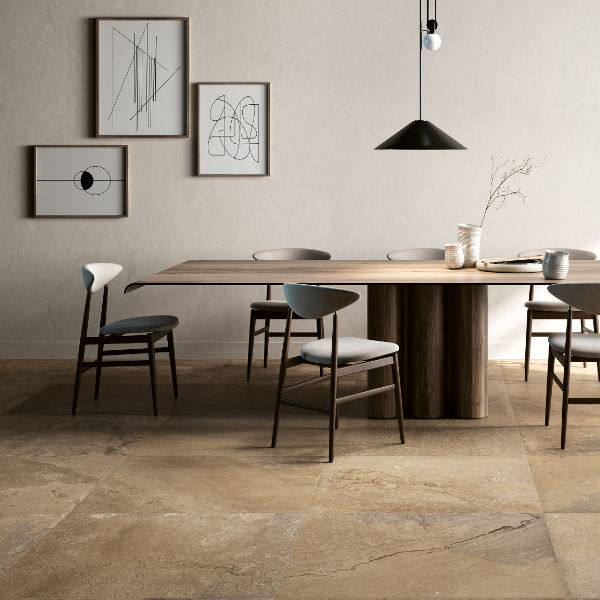
How The Floor Is Used
Choosing wood effect porcelain tiles begins with understanding how the room functions day to day. Floors in kitchens, hallways, and open-plan living areas need to cope with regular foot traffic, moisture, and changes in temperature. Porcelain offers a stable surface that does not move or mark easily, making it a reliable choice where real wood may struggle.
This reliability allows wood effect porcelain tiles to be used throughout the home without changing materials between rooms. Thinking about usage early on helps ensure the floor remains practical as well as visually appropriate.
Layout & Format
The layout you choose will influence how the floor reads within the room. Standard plank formats suit most spaces, but larger rooms often benefit from a more structured approach. The Natural Finish Maple Tile shows how mixed tile sizes introduce variation without appearing busy. This type of layout can help define open-plan areas and add a sense of balance. It also reduces the repetitive look that can occur with long, uninterrupted plank runs.
Finishes That Suit The Room
Different rooms place different demands on flooring, so the surface finish should reflect how the area is used. Living areas may favour a softer, more natural feel, while kitchens and entrances benefit from finishes that handle regular wear. Wood effect porcelain tiles are designed to perform consistently in these settings, without requiring ongoing treatment. Choosing a finish with the right balance of grip and surface detail helps the floor remain comfortable and reliable over time.
Indoor & Outdoor Continuity
Where interiors open directly onto gardens or terraces, flooring continuity can support a more cohesive layout. Using the same wood tone indoors and outdoors helps spaces feel connected rather than divided. The Cigar Indoor/Outdoor Tile is a good example of how wood effect porcelain tiles can achieve this while meeting practical outdoor requirements. Its surface supports safer use outside, allowing the visual language of the interior to extend beyond the threshold. This approach works particularly well in modern homes with large glazed openings.
Tone & Colour
Tone plays an important role in how a room feels once the floor is installed. Lighter wood shades can help reflect light in smaller or shaded rooms, while mid to darker tones add weight and definition to larger areas. Wood effect porcelain tiles are available in a wide range of colour depths, making it easier to work alongside existing furniture and finishes. Considering how natural light changes throughout the day can also help guide the right choice. A well-chosen tone supports the room rather than dominating it.
Decorative Detail
Texture adds another layer of interest, particularly in spaces that might otherwise feel flat. Decorative wood effect tiles can be used to introduce pattern without overwhelming the design. The Kalua Knot-Wood Tile shows how subtle detailing within a wood finish can be used to define zones or add character to walls and smaller areas. Used alongside plain tiles, decorative elements help create contrast while maintaining a cohesive look. This approach supports interiors that feel intentional and well resolved.
How To Choose Wood Effect Porcelain Tiles For Your Floor
Seeing wood effect porcelain tiles installed can provide clarity that images alone cannot. Viewing tiles in person allows you to assess tone, surface detail, and scale within a realistic setting. If you are based in East Sussex, visiting the Mayfield Porcelain showroom offers the opportunity to compare finishes and layouts with guidance from the team. For customers further afield, advice is always available by phone on 01435 512301, helping you choose tiles that suit both your floor and your wider interior.
