
Why The Comparison Matters
Choosing a kitchen floor is one of the longest-lasting decisions in a renovation, and the three options most homeowners weigh are porcelain kitchen floor tiles, real or engineered wood, and luxury vinyl. Each has its appeal in a brochure, but they behave very differently once you cook, spill, drag chairs, run a dishwasher, and live in the room day after day.
Mayfield Porcelain are a family-run tile retailer in East Sussex, and we help homeowners cut through the marketing on this question by setting out what each surface actually does in a busy kitchen, then matching the right choice to the way the room gets used.
Kitchen Floors Have Their Unique Problems
Kitchens typically get more daily wear than any other room in the house. Water pools by the sink, grease drifts further from the hob than people realise, dropped pans test the impact resistance of any floor, and underfloor heating cycles the surface temperature up and down through the year. On top of all of that, dishwashers and fridges leak occasionally, even the well-maintained ones, and the floor has to take that without warping or staining. Few surfaces handle all of these well. Porcelain is one of the rare ones that does.
Where Wood Falls Short
Real and engineered wood are beautiful materials, and in a calm, low-traffic room, they last for decades. In a kitchen, they struggle. Water around the sink and dishwasher lifts the grain, scratching marks appear within months in front of the oven, and the lacquer wears thin along the routes between the island and hob.
Refinishing is possible but expensive and disruptive, since the kitchen comes out of use while the work happens. Engineered wood handles humidity better than solid wood, but it still does not love standing water, and underfloor heating slowly dries the boards in ways that show at the joints.
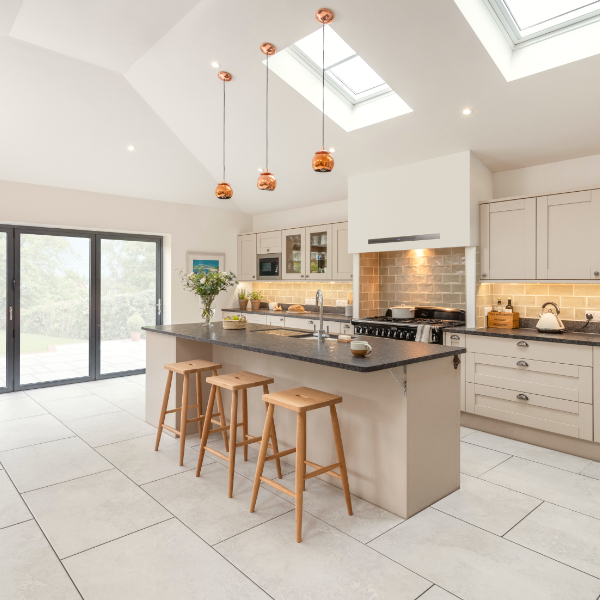
A stone-effect option like the Dunestone Tile shows where porcelain pulls ahead. It delivers the soft, characterful look of limestone, complete with subtle veining and rustic chipped edges, but the porcelain body is non-porous, so water at the sink does not penetrate, and heat from the oven door does not change the colour of the tile in front of it.
Where Vinyl Falls Short
Luxury vinyl plank has improved enormously in the last decade. It looks impressive at the showroom, feels forgiving underfoot, and the price point is attractive. The problem in a real kitchen is that the printed pattern sits under a protective film, and that film is the only thing between your eyes and a plain piece of plastic. In the high-traffic strips, in front of the hob, the sink, and the kettle, that film scratches and dulls within a few years. Once it does, there is no fix short of replacement. Vinyl also reacts to heat. Around a wood-burner, under direct sun through south-facing bifolds, or over poorly commissioned underfloor heating, the planks can shrink, gap, or lift at the seams.
Patterned Options
We have established that vinyl and wood fail in areas such as the kitchen. But what happens when it comes to patterned tiles?
This is where vintage porcelain, like the Cosmic Black Tile, makes the case for the upgrade. The unique surface gives a gorgeous finish on the face for a hand-crafted feel, and the colour and texture are baked into the body of the tile, so no amount of scuffing strips the look away. Where vinyl has eight to ten good years in a busy kitchen, porcelain comfortably runs to twenty-plus with the same finish.
Why Porcelain Kitchen Floor Tiles Beat Wood & Vinyl
Porcelain wins because it solves the problems wood and vinyl share without making you give up the look you wanted. It does not absorb water, so spills, dishwasher leaks, and wet boots are a wipe rather than a worry. It does not scratch through to a different layer, because the colour runs through the body of the tile. It does not warp or gap over underfloor heating. And modern stone-effect, wood-effect, and patterned porcelain ranges give you almost any look you would have chosen from the wood or vinyl shelf, with none of the long-term maintenance, making them great floor tiles for any room.
The Right Colour For The Room
The Faye Garden Tile is a great example in this conversation. The warm taupe palette and Mediterranean character suit modern farmhouse kitchens, country kitchens, and city kitchens that want a softer floor underfoot. It is the kind of look people often try to achieve with a printed vinyl or an engineered floor and end up replacing within a decade. As porcelain, it stays the same for the life of the kitchen.
A Practical Way To Decide
If your kitchen is low-traffic, rarely used for serious cooking, and you have time and budget for refinishing every few years, wood is still a valid choice. If your kitchen is being fitted on a tight budget and you accept it as a temporary floor, vinyl will get you through. For everyone else, especially anyone with kids, dogs, a dishwasher in regular use, or an open-plan extension where the floor is on view from other rooms, porcelain is the longer-lasting and ultimately cheaper option.
If you would like to see the difference in body density, finish, and feel, the Mayfield showroom holds full ranges of porcelain tiles side by side. Call us on 01435 512 301 or pop in. We would love to chat.
Bestsellers


Are porcelain kitchen floor tiles colder underfoot than wood or vinyl?
Without underfloor heating, yes, porcelain feels cooler. With underfloor heating, porcelain is the warmer, more responsive surface of the three because it conducts heat efficiently.
Will porcelain kitchen floor tiles crack if I drop a heavy pan?
Quality porcelain bonded to a sound subfloor is highly impact-resistant. Cracks in domestic kitchens almost always trace back to a poorly prepared substrate or the wrong adhesive rather than the tile itself.
Is porcelain harder to clean than vinyl?
No. Porcelain wipes clean with warm water and a pH-neutral cleaner. Grout joints need sealing once after installation but otherwise the floor takes very little upkeep.
How long do porcelain kitchen floor tiles last compared to wood and vinyl?
Well-laid porcelain comfortably runs to twenty-plus years with no change in appearance. Real wood typically needs refinishing every five to seven years in a busy kitchen, and luxury vinyl rarely looks the same after eight to ten years of family use.
Is porcelain noisier than wood or vinyl?
Porcelain over a solid subfloor can sound slightly harder underfoot, but in a normal kitchen, the difference is small. Rugs, soft-close cabinetry, and felt pads under chair feet handle most of it.
Get In Touch
If you are deciding between porcelain kitchen floor tiles, wood, and vinyl for an upcoming kitchen, the fastest way to make a confident choice is to compare them in person. Call us on 01435 512 301 or visit the Mayfield showroom in East Sussex.
